TOWN PLANNING KNOW HOW BOOKS
  • Home
  • How to appeal book
  • How to object book
  • Blog
  • Helpful links
  • Contact

How do I appeal against a refusal of planning permission?

Update: from 1 April 2026 the rules on planning appeals will change significantly.  More details here. The information in this book will be out of date after that time.

If you have received a refusal of planning permission from your Council then there is a right of appeal to the Government's Planning Inspectorate. You want to make sure you get your best case across, and to comply with the detailed rules for appeals. Our top tips for an appeal are:
  1. Stop and think first. Is an appeal the only option? Or can you revise the planning application and negotiate with the Council?
  2. If you are going to appeal, make sure you know the deadlines. You must lodge your appeal in time – with all the required information – or it won’t be accepted.
  3. Choose the right procedure for the appeal carefully. There are three: written representations, Hearings and Inquiries, and they all have advantages and disadvantages.
  4. Spend time preparing your Appeal Statement of Case. Thoroughly read the Council’s reasons for refusing your application so you properly respond.
  5. Make sure you also respond to objections from neighbours – they will be involved in the appeal process.
  6. Read the Council’s development plan that covers your area and national planning policies. Make sure you refer to these in your Appeal Statement.
  7. Lodging an appeal is free, but you can claim costs against the Council if they behave unreasonably.
Thousands of planning applications are made every year across England. Not all of them are successful, but the Council’s decision is not necessarily final. There is a right of appeal and many appeals are made every year. 
But this can be a confusing process...
There are strict deadlines to meet, important information that must be submitted to validate an appeal, and certain documents that can (and cannot) be submitted. And when appealing it is important to make the best case possible: it might be your only chance to secure an important planning permission.

But over 20,000 appeals are lodged every year
- around 40% of all refused planning applications. So appeals are a common and an important part of the planning system.

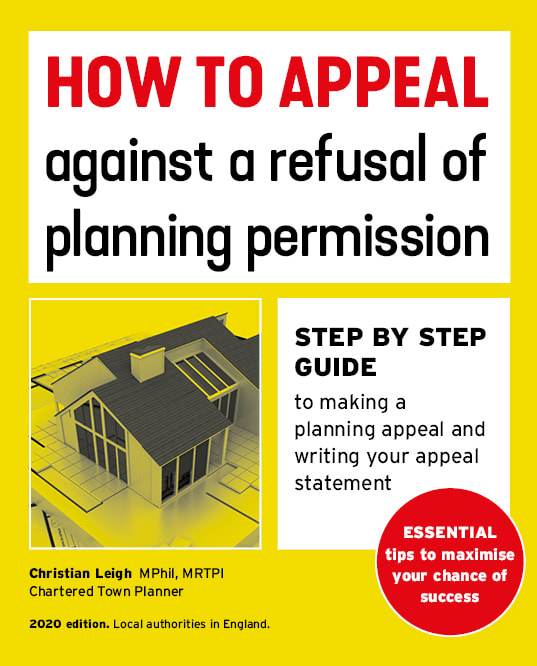
From the basics of what is needed to lodge an appeal, through to preparing your case, responding to the Council’s case and attending the appeal site visit, this step-by-step guide will cut out the confusion of the appeal process.

​Each chapter takes you through the stages of the appeal process explained in clear English, maximising your chance of success.

The book sets out:
  • A comprehensive explanation of the appeal process, and types of appeal
  • A step-by-step guide showing how to complete the appeal form – avoid mistakes that could make you lose the right to appeal
  • Detailed advice on how to prepare your appeal case, to ensure it is targeted towards the right issues
  • How to respond to the Council’s objections, and to neighbours’ objections
  • What to avoid when lodging your appeal – maximise your chances of success and to prevent making an invalid appeal
  • Practical guidance on how to conduct yourself at the appeal site visit, Hearing or Inquiry
  • When to seek costs against the Council – how to avoid costs awarded against you
  • How to make appeals against planning conditions
  • Advice on when you can use professionals to help you
Picture
BUY APPEALS BOOK
156 pages. Available via Amazon.
Picture
The book includes:
How does the appeal process work?
  • What is the formal basis for an appeal?
  • Who are the Inspectors who decide the appeal?
  • What does the Inspector look at when deciding the appeal?
Should you appeal?
  • The advantages and disadvantages of appealing.
  • Why you might want to carry on discussions with the LPA.
How do I appeal?
  • The importance of preparing for the lodging of the appeal.
  • A step by step guide on how to complete the appeal form, to avoid mistakes that could make you lose the right to appeal.
  • What documents should be included when lodging an appeal, which are commonly forgotten or ignored by many appellants.
  • What documents you should not include.
Preparing the Appeal Statement
  • How to target your appeal statement to the issues the Inspector will be looking at.
  • The importance of the development plan and the status of planning policies.
  • How to respond to neighbours.
  • What to avoid in writing your statement.
What happens next?
  • What happens after you have lodged the appeal.
  • How to check for procedural errors.
  • When you must respond to the LPA’s case and any further letters from neighbours.
  • How to conduct yourself at the Inspector’s site visit.
Costs
  • When you can apply for costs.
  • How to apply for costs.
  • How to avoid costs being awarded against you.
Appeals against conditions
  • Why planning conditions are attached, and the tests they must meet.
  • How you can appeal against a condition you dispute.
  • Potential dangers in this type of appeal, and how to avoid risk.
Using professionals
Photo above by Gleren Meneghin on Unsplash
Reviews
I’m particularly pleased that Christian Leigh has produced this book. It is written for non-experts who need to appeal against the refusal of planning permission. Non-professional and ‘irregular’ appellants struggle to understand and engage with the technical and procedural nuances of this area of planning practice, so Christian’s down-to-earth and well-informed guidance is an essential support to ensure that such people can appeal effectively.

​Joe Doak, Associate Professor of Urban Planning & Development (1992-2020),  Henley Business School, University of Reading

​As a solicitor dealing with many aspects of property law, I have found this book extremely useful, allowing me to find a clear, concise and detailed information relating to general planning law. A very useful book for both those in practice and the general public alike.
​

Stewart Webb, Consultant Solicitor, Heald Nickinson

Christian Leigh is a known planning expert of considerable professional standing and experience who has helped us navigate the mine-field which has become the demanding planning and Appeal systems in England. This book sets out clear information and processes,  providing good value to those who buy it with examples which will relate on a tangible step-by-step basis.
 ... an invaluable aid to definitively assist those seeking beneficial planning consents after the negative experience of a planning refusal.
​

Belinda Simpson, Geoff Beardsley & Partners Architects

Mr Leigh has successfully secured a number of appeals for us and this excellent step by step guide has all the hallmarks of his concise and methodical approach.
​

Alex Fergusson, AF Architects

​We have worked with Christian on a number of planning issues over the years and ​have always enjoyed his professionalism, pragmatic approach to planning problems and more often than not the result!
​

Sid Smith, SSPM Project Design Cost Management

These books reflect Christian’s professional approach: clear, concise and very helpful ...  easy to understand but also addresses all the common (and not so common) pitfalls of the Planning Appeals process. Definitely 'Go-To’ books.
​

Charles Doe Architects

...  an excellent user-friendly guide for small businesses and the public in how to undertake the tricky planning appeals process.
​

Gary Short, Shorts Group Ltd
Powered by Create your own unique website with customizable templates.
  • Home
  • How to appeal book
  • How to object book
  • Blog
  • Helpful links
  • Contact